Yuzu: The Japanese Citrus Fruit You Need to Know

🍋 What Is Yuzu?
Yuzu is an East Asian citrus fruit, about the size of a small tangerine, with a bumpy yellow-green rind. Its aroma sits somewhere between grapefruit, lime, and mandarin.
The fruit itself is very sour and full of seeds, so it's rarely eaten fresh. Instead, its fragrant zest and juice are used to flavor drinks, sauces, and desserts.
Its taste is bright, tart, and floral — more complex than lemon, less bitter than grapefruit. A little goes a long way, which is why you'll find it in everything from tea to marinades.
🍯 Yuzu Tea vs. Savory Yuzu
Yuzu splits naturally into two categories, depending on how it's used:
- Sweet & drinkable – yuzu tea, yuzu juice, and yuzu-flavoured drinks, and yuzu desserts like yuzu ice cream. This is the most familiar way to enjoy yuzu, especially in colder months.
- Savory & condiment – yuzu juice or zest blended into sauces, dressings, and pastes, adding acidity and aroma to grilled meats, seafood, and salads.
🍵 How to Make Korean Yuzu Tea
Korean yuzu tea (yuja-cha) is the easiest way to bring yuzu into your daily routine, and it needs almost no equipment.
You need:
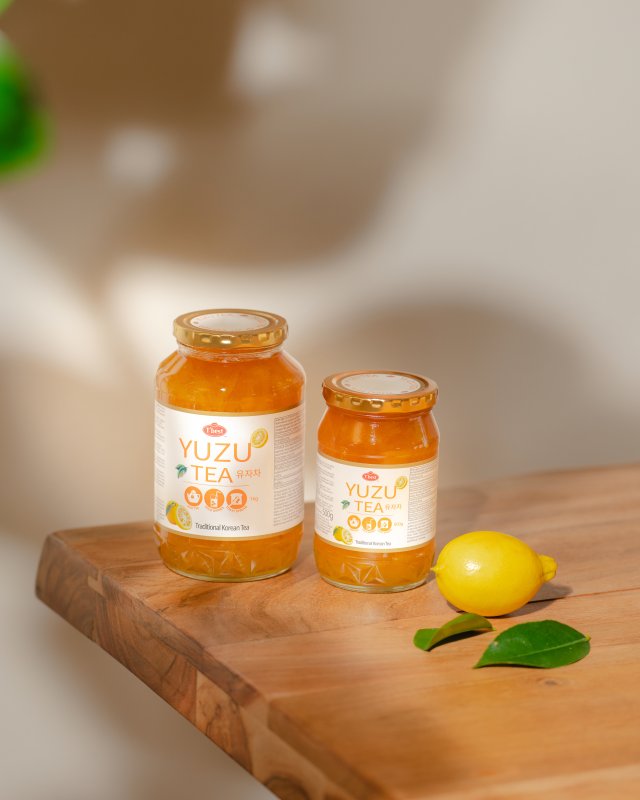
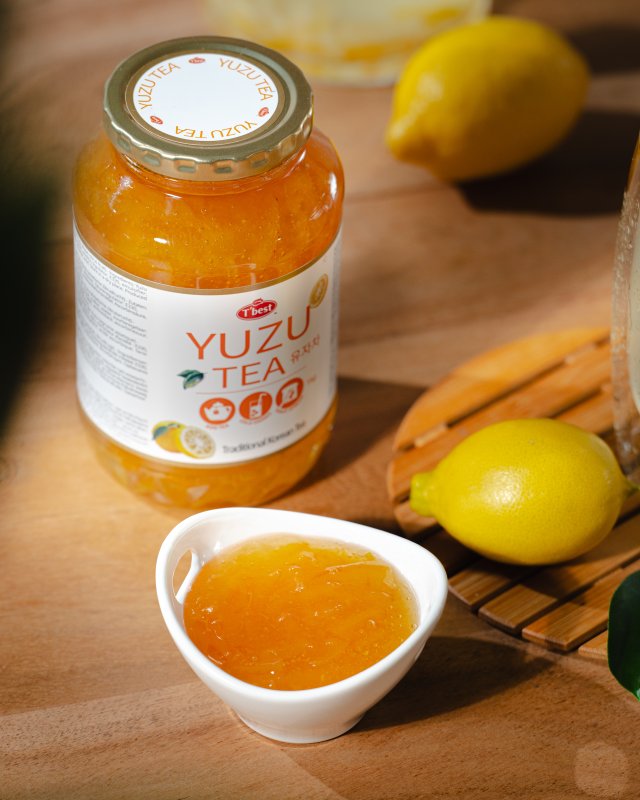
- 1–2 teaspoons of Korean Honey Yuzu Lemon Tea 500 g – T'best or the 1 kg version
- 150–200 ml hot or cold water
Method:
- Spoon the yuzu tea concentrate into a cup.
- Add hot water for warming yuzu tea, or cold water and ice for iced yuzu tea.
- Stir until the concentrate dissolves and enjoy.
💡 Tip: Eat the peel pieces in the jar — they're candied yuzu rind, not a garnish to strain out.
🧊 Prefer something less sweet? Pure yuzu citrus juice skips the added sugar for a sharper, more intense yuzu flavor. Looking for a drink with a kick? Yuzu-flavoured soju brings the same citrus note to a chilled, refreshing pour — perfect for warmer months.
🥣 Tips for the Perfect Yuzu Tea
- Sourness: yuzu tea concentrate is pre-sweetened, but pure yuzu juice is very tart — start with a small amount and adjust to taste.
- Storage: keep yuzu tea and juice refrigerated and tightly sealed once opened to preserve color and aroma.
- Pairing: yuzu's acidity cuts through rich, fatty, or spicy food, which is exactly why it appears so often in East Asian sauces and marinades.
🍶 Savory Yuzu: Sauces, Dressings, and Condiments
Beyond yuzu tea, yuzu juice and zest are a staple flavoring across Japanese and Korean condiments:
- Yuzu ponzu sauce — naturally brewed soy sauce with yuzu juice, used as a dipping sauce for shabu-shabu, dumplings, or grilled fish.
- Yuzu dressing — a citrus-soy dressing for salads, cold noodles, or steamed vegetables.
- Yuzu BBQ sauce — a citrusy glaze for grilled chicken, pork, or vegetables.
- Yuzu kosho — a fermented yuzu-chili paste; use sparingly in soups, marinades, or on grilled meat.
- Yuzu sriracha or gochujang sauces — familiar heat with a citrus edge.
- Shichimi togarashi — the classic Japanese 7-spice blend with dried yuzu peel, sprinkled over rice, noodles, or skewers.
🍽️ Quick Yuzu Recipes
Yuzu ponzu dip — pour ponzu into a small dish, add a pinch of grated garlic or chili flakes, and use for dumplings, sashimi, or shabu-shabu.
Yuzu dressing salad — toss mixed greens, cucumber, and shredded carrot in a bowl, drizzle with yuzu dressing, and top with sesame seeds.
Yuzu kosho chicken — rub chicken thighs with a thin layer of yuzu kosho, grill or pan-fry until cooked through, and serve with steamed rice and a wedge of lime.
Yuzu marinade for fish — whisk yuzu ponzu with a splash of oil and grated ginger, marinate white fish for 20 minutes, then pan-sear or grill.
💡 Tip: Because yuzu kosho and shichimi togarashi are concentrated, add them at the end of cooking so the aroma doesn't cook off.